
Man of the House Screenshots







Man of the House review
Story, gameplay flow, tips and personal impressions of Man of the House
Man of the House is a choice-driven life simulation game where you play as a young guy moving into a crowded home and learning to balance relationships, money, and self-improvement. In this guide, I’ll walk you through what makes Man of the House unique, how its core systems work, and the kind of experience you can expect from start to finish. I’ll also share some personal lessons I learned while trying to juggle jobs, stats and multiple storylines so you can avoid the same mistakes and enjoy the game to its fullest.
What Is Man of the House and How Does It Play?
So, you’ve heard about this life simulation adult game that’s been buzzing around, and you’re curious what all the fuss is about? Let’s pull up a chair. The Man of the House game is a unique blend of slice-of-life storytelling, sandbox freedom, and character-driven progression that hooks you with its relaxed charm. You step into the worn-out shoes of a young guy in his early twenties who, due to a twist of fate (and maybe a bit of laziness), finds himself moving back to his hometown. The kicker? He’s not moving into a quiet family home, but into a shared house full of interesting women, each with their own stories, personalities, and paths for you to discover.
At its heart, the Man of the House overview is simple: you live your life, manage your time and money, build relationships, and see where the story takes you. There’s no world-ending crisis or pressing deadline. The pressure comes from your own curiosity—wanting to unlock the next scene, learn more about a character, or finally figure out how to progress a stalled route. It’s a digital hangout spot where you direct the narrative through your daily choices. 😊
Core premise and story setup in Man of the House
The Man of the House story begins with a homecoming. Your character arrives at a spacious house, which you’ll soon learn is owned by a family friend. It’s not empty, though. You’re greeted by the stern but kind landlady, Anna, who lays down the basic house rules. From there, you slowly meet the rest of the ensemble cast who live in or frequently visit the house: the studious and reserved roommate, the energetic friend from next door, the mischievous cousin, and others you’ll encounter around town.
The genius of the setup is its gradual, natural introduction. The game doesn’t dump all the characters and their backstories on you at once. Instead, you bump into them during your daily routine. Maybe you’ll meet the athletic girl at the gym in the morning, or see the artistic one studying in the park in the afternoon. Early game events are designed to show you who everyone is and point you toward the key locations that will become your second home: the house itself, the downtown city center, the local gym, the college campus, various workplaces, the park, and a cozy bar for evening socializing.
What’s crucial to understand is that there is no strict linear path. 🗺️ The narrative unfolds based on your actions. The Man of the House game operates on a system of prerequisites and opportunities. Each character has a series of events or “scenes” that trigger only when certain conditions are met. These conditions can be almost anything: having a high enough relationship level, possessing a specific stat (like Strength or Charisma), owning a particular item (a gift, a book, a piece of clothing), or simply being in the right location at the right time of day.
This makes the early game feel wonderfully exploratory. You’re not following a quest marker; you’re learning a new town and its rhythm. You might spend a week just figuring out how to make decent money, or experimenting to see which character is in the kitchen on Tuesday evenings. The story is that daily discovery.
Main gameplay loop: time, money, stats and locations
This is where the magic—and the strategy—of the Man of the House gameplay truly lives. If the story is the destination, the gameplay loop is the vehicle that gets you there. It’s a satisfying cycle of resource management and exploration that will feel familiar to fans of life sims, but with its own adult-themed twist.
Your most precious resource isn’t money—it’s time. Each day is split into four blocks: Morning, Afternoon, Evening, and Night. Every action, from taking a shower to working a job to visiting the downtown bar, consumes one of these blocks. You can’t do it all in one day, so you must choose your priorities. Want to earn cash? You’ll need to spend time blocks at a job. Want to get stronger? That’s time at the gym. Want to advance a relationship? You need to find and spend time with that person.
This is where money comes in. You start with very little, so part-time work is essential. Jobs are typically location-based (like working at the dock or the store) and pay you at the end of the time block. This cash is your lifeline. You use it to pay your weekly rent (a gentle nudge to stay productive), but more importantly, you invest it in your progress. This means:
- Gear & Items: Buying new clothes to boost your confidence (a stat!), purchasing gifts to give to characters, or buying tools like a laptop for new activities.
- Activities: Paying for gym memberships, signing up for classes (which boost stats like Knowledge or Charisma), or buying drinks at the bar to socialize.
- Unlocking Locations: Some areas or services require an upfront payment to access.
Now, let’s talk about stats. Your character isn’t static. You can improve him in several key areas, and this is non-negotiable for progression. The main stats usually include:
- Physical/Strength: Built by working out at the gym.
- Charisma/Social: Improved through classes or specific social actions.
- Knowledge: Raised by reading books or attending lectures.
Why do these matter? Because character routes are often gated behind them. That sweet, athletic character might not take you seriously until you’re strong enough. A intellectual scene might require a certain Knowledge level to even understand the conversation. Upgrading stats opens new dialogue options and triggers key scenes, making it a core part of the puzzle.
Finally, you have locations. The map is your playground. Each location has a purpose:
* Home: Where you interact with housemates, sleep, save, and use the computer for hints.
* City Center: For shopping, some jobs, and key services.
* Gym/School: For stat improvement.
* Park/Bar: For social encounters and events.
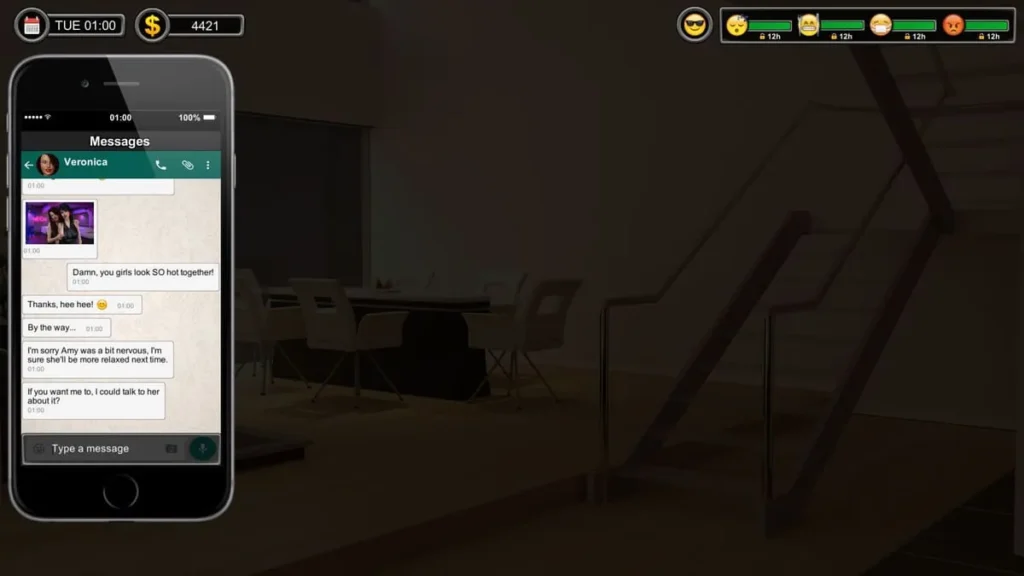
The hint system and phone interface are your best friends. The in-game computer and your phone’s contact list often provide vague but crucial clues about what a character might want or need next. The phone also tracks your album (unlocked pictures) and achievements. Learning to “read” these hints is a skill in itself.
Personal Tip: Don’t ignore the hints! Early on, I thought I could just brute-force my way through conversations. I quickly learned that the game is gently guiding you. If a character’s hint says “She appreciates thoughtful gifts,” it’s literally telling you to go buy her something specific from the store.
To summarize, the core Man of the House gameplay loop is a tight cycle of:
* Managing your daily time blocks.
* Earning money through jobs.
* Investing money in stats, items, and activities.
* Exploring locations to find characters and trigger events.
* Using hints to figure out the next step in a route.
Playable routes and overall progression structure
So, how does all this daily activity translate into an actual story? Through the brilliant, if sometimes puzzling, system of Man of the House routes. Think of the game not as one story, but as a collection of intertwining character arcs that you choose to engage with.
Each main female character has her own dedicated route—a series of sequential scenes that tell her story and deepen your relationship. Progression along a route is rarely about just clicking through dialogue. It’s a puzzle to solve. 🧩 A typical scene in a sequence might require:
* A minimum Affection level (gained by spending time with her and making good choices).
* A specific stat threshold (e.g., Charisma 4).
* A key item in your inventory (a specific gift, a ticket, etc.).
* You to be in a specific location at a certain time of day.
Your phone becomes a progress tracker. It will often show you a list of scenes for a character, with the next locked one hinting at its requirements. The goal is to check those boxes. This structure makes progression feel incredibly rewarding. You’re not passively watching a story; you’re actively working to unlock it.
The overall progression is sandbox-style. You can work on multiple routes simultaneously, though your limited time each day means you’ll naturally focus on one or two at a time. Some routes might have moments of overlap or mutual exclusivity, encouraging replayability. There are also plenty of repeatable, non-route-specific events (like casual hangouts or part-time job scenes) that make the world feel alive even when you’re between major story beats.
Let me share a personal story that taught me how this works. I was deeply invested in one character’s route and had hit a wall. Her next scene just wouldn’t trigger, even though her affection was high. I checked the hints, revisited all our usual spots—nothing. I was ready to give up. Finally, in frustration, I went back to the very basics: I looked at my stats. My Strength was one point too low. One point! I’d been so focused on her and her likes that I’d neglected a simple gym session for two in-game days. That single missing requirement blocked everything. It changed my entire approach. Now, I always keep a balanced stat-building schedule and constantly cross-reference the phone’s clues with my own inventory and stat sheet. It turned the game from a casual social sim into a engaging, goal-oriented experience.
This is the heart of how does Man of the House work. It’s a game of patience, observation, and smart planning. The joy comes from piecing together the clues, optimizing your schedule to build stats and earn cash for that perfect gift, and finally being in the right place at the right time to see the story unfold because you made it happen.
A Typical Day in the Life: Seeing the Loop in Action
Let’s wrap this overview with a concrete example of how these systems weave together in a typical in-game day. Imagine this is your protagonist’s Wednesday:
- 🌅 Morning: You wake up at home. You check your phone and see a hint that a character, let’s call her Mia, “might be studying in the park on sunny afternoons.” You note it. You have low cash, so you head to the City Center for the Morning block to work a shift at the mini-mart. You earn some much-needed dollars.
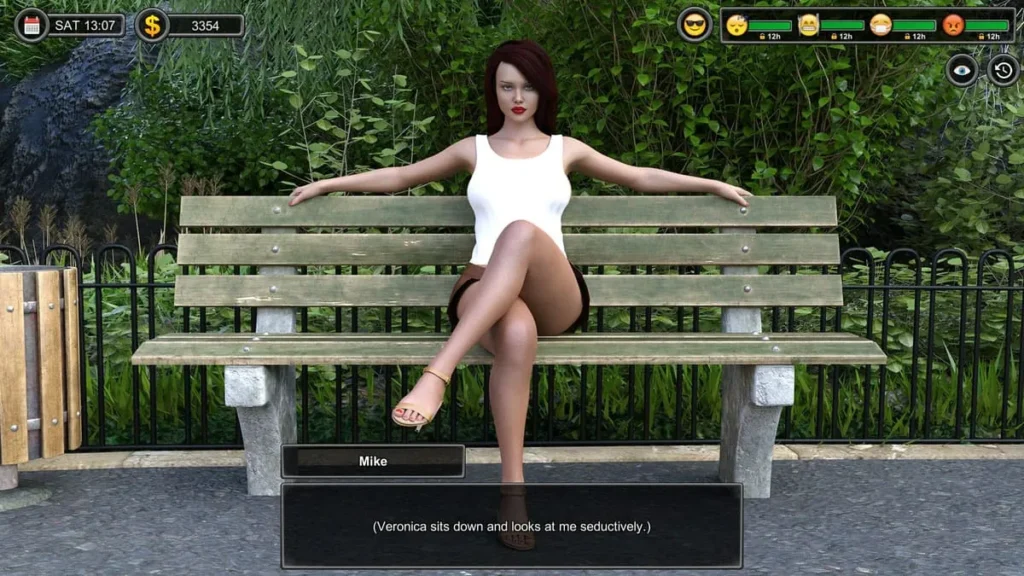
- ☀️ Afternoon: The weather is sunny! Remembering the hint, you use your Afternoon block to go to the Park. Sure enough, Mia is there on a bench with a book. You talk to her, make choices that increase her affection, and the conversation reveals she likes iced coffee. New hint unlocked!
- 🌆 Evening: You need to work on your Charisma to unlock a dialogue option with another character. You spend your Evening block (and some of your hard-earned cash) taking a public speaking class at the college. Your Charisma stat ticks up by one.
- 🌙 Night: You’re out of time for major actions, so you head back Home. In the kitchen, you have a casual, repeatable interaction with your landlady Anna about her day. It’s a small, world-building moment. You then head to your room to sleep, saving your game.
The next day, you might use your earnings to buy an iced coffee from the city center, then gift it to Mia in the afternoon for a bigger affection boost. Your increased Charisma might now let you advance a different route with someone at the bar in the evening. This is the Man of the House gameplay loop in motion—a constant, engaging dance between your resources, your goals, and the living world around you. It’s a deeply satisfying formula that keeps you saying, “Just one more day…” long into the night.
Man of the House can look intimidating at first, but once you understand its daily rhythm and how character routes are unlocked, it turns into a surprisingly cozy and addictive life sim. By paying attention to time slots, regularly improving your stats, and using the in-game hints as gentle guidance rather than strict instructions, you can steadily unlock new scenes and deepen each storyline at your own pace. If you enjoy character-driven games with a strong focus on routine, progression and discovery, Man of the House is worth committing to a few in-game weeks and seeing how far you can take your household adventures.